
Short answerConcrete and clay tile last a long time. The underlayment under them does not. Tile sheds the sun and most of the rain, but the layer that actually keeps your house dry is the sheet under the tile, and on an older tile roof that sheet is usually what has failed when the ceiling stains.
What does underlayment do on a tile roof?
It is the waterproof layer. Tile hangs on battens with gaps between the pieces, so wind-driven rain gets under it; the underlayment takes that water down to the eave.
That is why a tile roof can look perfect from the street and still leak. Water finds the gaps between tiles and runs on the underlayment. When the underlayment is cracked, brittle or torn, the water goes into the deck instead.
How do you know the underlayment is failing?
Stains on the ceiling with no broken tile above them, leaks that only show up in wind-driven rain, and brittle, cracked felt where a tile is lifted.
The only way to know for sure is to lift tile and look. On an inspection we lift tile at the leak, at the eaves and in the valleys, which are the places the underlayment sees the most water.
What is a tile lift and relay?
The tile comes off and is stacked, the old underlayment is stripped, any bad deck is replaced, new underlayment and battens go on, and the same tile goes back.
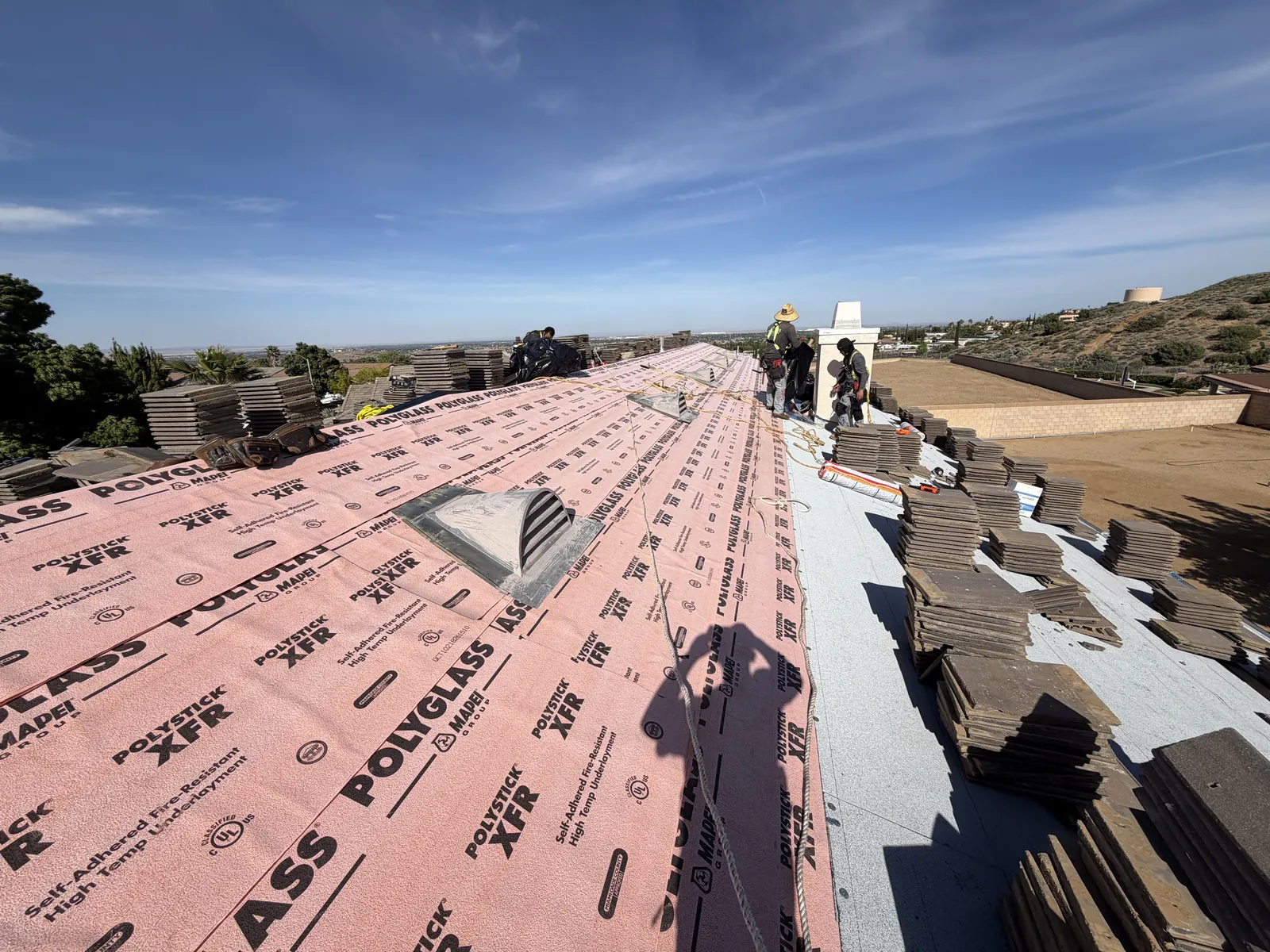
Reusing the tile is what makes a relay cheaper than a full replacement with new tile. Some tiles break on the way off, so a relay needs matching replacements. Because the underlayment is replaced, cities and the county generally treat a relay as a reroof, with a permit. You can see one step by step in our deck and underlayment photos.
What underlayment goes under the tile?
On our jobs you will see a self-adhered sheet, which sticks to the deck instead of being nailed through, along with the battens the tile hangs on.
The exact product depends on the roof and what the building department and the tile maker call for. We tell you what we are putting down before the job starts.